
304 vs 316 Stainless Steel: Choosing the Right Grade for Your Bathroom Vanity
You want a bathroom vanity that lasts and looks great. Most homeowners find 304 stainless steel meets their needs. It resists rust and costs less than 316. If your home sits near the coast or faces high humidity, 316 offers stronger protection. Look at the price difference below:
| Stainless Steel Type | Price Range (per pound) |
|---|---|
| SS 304 | $1.50 - $2.50 |
| SS 316 | $2.50 - $3.50 |
Choosing between 304 vs 316 Stainless Steel depends on your environment and budget.
304 vs 316 Stainless Steel: Quick Comparison
Key Features Compared
When you look at 304 vs 316 Stainless Steel, you find some big differences. Both types look almost the same. But they work differently depending on where you use them. You need to pick the one that fits your bathroom.
Here is a table with the main differences:
| Feature | 304 Stainless Steel | 316 Stainless Steel |
|---|---|---|
| Cost | Lower | Higher |
| Composition | No molybdenum | Contains molybdenum |
| Corrosion Resistance | Good, but less effective in salty or humid air | Superior, resists harsh chemicals and salt |
| Suitability | Regular bathrooms | Coastal, pool, or spa bathrooms |
304 stainless steel works well for most homes. It saves money and protects against rust. If you live near the ocean or have lots of moisture, 316 stainless steel is better. The molybdenum helps stop corrosion from salt and cleaning chemicals.
You can check the chemical makeup:
| Grade | C | Si | Mn | P | S | N | Cr | Ni | Mo |
|---|---|---|---|---|---|---|---|---|---|
| 304 | 0.07 | 1.00 | 2.00 | 0.045 | 0.015 | 0.10 | 17.5-19.5 | 8.0-10.5 | - |
| 316 | 0.07 | 1.00 | 2.00 | 0.045 | 0.015 | 0.10 | 16.5-18.5 | 10.0-13.0 | 2.0-2.5 |
The biggest difference is molybdenum in 316. This makes it better at fighting rust, especially in tough bathrooms.
Tip: If you clean your vanity a lot or use strong cleaners, 316 stainless steel is better for chemicals.
Pros and Cons
Think about the pros and cons before you decide. Here is a simple list for each type:
304 Stainless Steel
- Pros: Widely available, cost-effective, excellent corrosion resistance for all standard indoor environments, zero formaldehyde, 20+ year lifespan with minimal maintenance.
- Cons: Not recommended for direct coastal saltwater exposure or environments with high chloride concentrations.
316 Stainless Steel
- Pros: 2–3% molybdenum content provides superior chloride resistance, ideal for beachfront hotels, marine environments, and facilities with aggressive chemical cleaning protocols.
- Cons: Approximately 15–20% higher cost than 304; overkill for standard indoor bathrooms not exposed to saltwater or harsh chemicals.
Both 304 vs 316 Stainless Steel work well. Most people choose 304 for normal bathrooms. Pick 316 if your bathroom is very wet or near the coast.
Here is a table showing where each type works best:
| Stainless Steel Type | Typical Applications in Bathrooms | Key Characteristics |
|---|---|---|
| 304 | Regular household and commercial bathrooms | Good corrosion resistance, economical, dry areas |
| 316 | Marine climates, pools, spas, hospitals | Higher corrosion resistance, humid or chemical areas |
You want your bathroom vanity to last a long time. Picking the right type helps stop rust and damage. When you look at 304 vs 316 Stainless Steel, think about where you live, how you clean, and your budget.
Corrosion Resistance
304 Stainless Steel in Bathrooms
You want your bathroom vanity to stay shiny and strong. 304 stainless steel gives you good protection against rust in most bathrooms. Many homeowners choose it because it works well in dry or lightly humid spaces. You see it in sinks, faucets, and cabinet hardware.
- 304 stainless steel resists rust and stains in regular bathroom conditions.
- It can show pitting if you use harsh cleaning products or if moisture stays on the surface.
- You need to clean your vanity often to keep it looking new.
- Strong chemicals and salty air can cause damage over time.
Note: Regular cleaning helps prevent spots and keeps your vanity safe from corrosion.
316 Stainless Steel for Coastal Areas
If you live near the ocean or in a humid climate, you face bigger challenges. Salt in the air and constant moisture can attack metal surfaces. 316 stainless steel gives you extra protection.
- This grade contains molybdenum, which fights rust and pitting much better than 304.
- People call it "marine-grade" because it stands up to saltwater and humid air.
- You see 316 stainless steel in spas, pools, and coastal homes.
- It lasts longer in tough environments and keeps its shine.
Tip: Choose 316 stainless steel for bathrooms in coastal areas or places with high humidity.
Impact of Humidity and Cleaning Agents
Humidity and cleaning products play a big role in how long your vanity lasts.
- High humidity lets water sit on surfaces, which can lead to rust.
- Chloride from cleaning agents or salty air speeds up corrosion, especially for 304 stainless steel.
- 316 stainless steel resists these problems because of its molybdenum content.
- You protect your vanity by wiping it dry and using gentle cleaners.
When you compare 304 vs 316 Stainless Steel, think about your bathroom’s environment. You get good results with 304 in most homes, but 316 gives you peace of mind in harsh conditions.
Durability and Longevity
Scratch Resistance
You want your bathroom vanity to look smooth and clean for years. Both 304 and 316 stainless steel offer good scratch resistance. You may notice small scratches if you use rough sponges or drop sharp objects. 304 stainless steel can show scratches a bit more because it is often used with a brushed finish. 316 stainless steel holds up well, especially in busy bathrooms. You can reduce scratches by using soft cloths and gentle cleaners. Over time, light scratches blend in and become less visible.
Structural Strength
You need a strong vanity that can handle daily use. Both types of stainless steel give you solid strength. Here are some key points:
- 304 stainless steel contains at least 18% chromium. This creates a shield that protects against rust.
- 316 stainless steel adds molybdenum. This extra element helps stop pitting and cracking, especially in tough places.
- 316 stainless steel works better in bathrooms with chemicals or chlorine. It stands up to harsh cleaners and pool water.
You can trust both grades to support sinks, countertops, and heavy items. If you want extra protection in a harsh environment, 316 stainless steel is the better choice.
Lifespan in Bathroom Use
You want your vanity to last a long time. With proper care, both 304 and 316 stainless steel can last for decades. 304 stainless steel works well in most homes and keeps its strength for many years. 316 stainless steel lasts even longer in coastal or humid areas. It resists rust, stains, and damage from cleaning agents. When you compare 304 vs 316 Stainless Steel, you see that both offer long life, but 316 gives you extra peace of mind in tough conditions.
Tip: Wipe your vanity dry after use and avoid harsh chemicals to keep it looking new.
Cost and Value
Price Difference
You want to know how much you will spend on your bathroom vanity. The price of stainless steel depends on the grade you choose. 304 stainless steel costs less than 316. You see this difference in the price per kilogram.
| Stainless Steel Type | Approximate Cost ($/kg) |
|---|---|
| 304 | 2.50 |
| 316 | 3.50 |
| 430 | 1.50 |
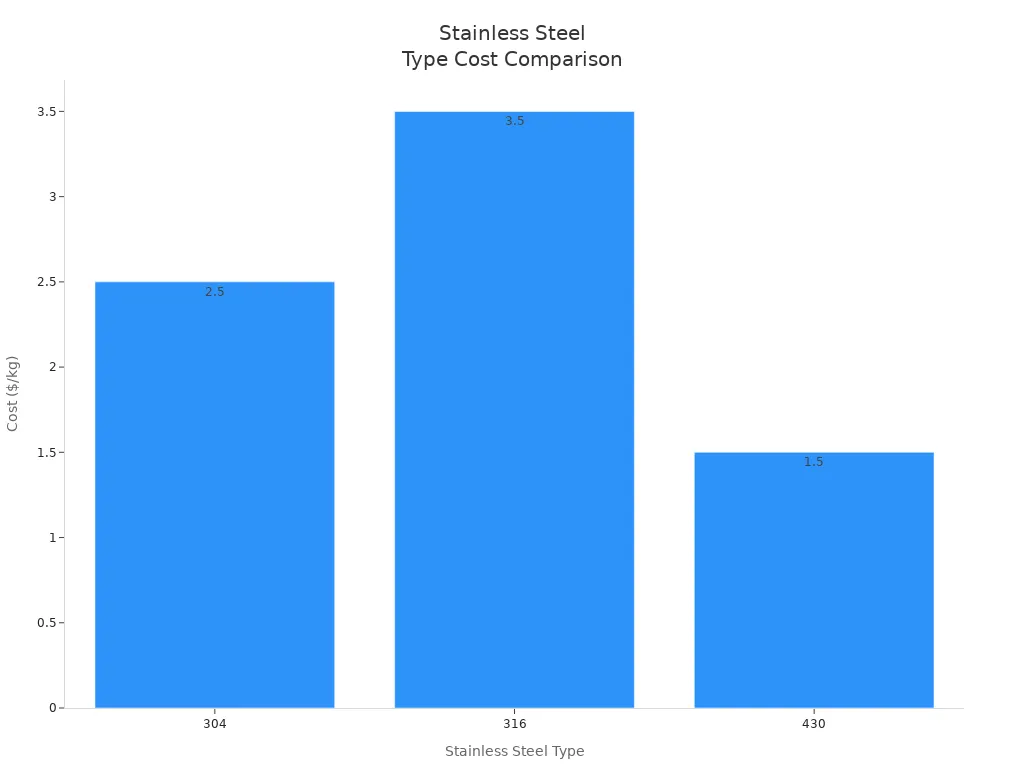
You pay more for 316 stainless steel because it contains molybdenum. This element boosts corrosion resistance and durability. If you choose 304, you save money and still get good protection for most bathrooms.
Is 316 Worth the Extra Cost?
You may wonder if the higher price of 316 stainless steel makes sense for your bathroom. The answer depends on your needs. 316 stainless steel stands up to moisture, salt, and strong cleaning agents. You get better performance in coastal homes or bathrooms with high humidity. The extra cost can pay off if you want your vanity to last longer in tough conditions.
If your bathroom faces lots of moisture or you live near the ocean, 316 stainless steel is a smart investment. You avoid rust and damage over time.
In regular bathrooms, 304 stainless steel gives you solid value. You get strength and a modern look without spending extra.
Budget-Friendly Choices
You want to make the best choice for your budget. If you have a standard bathroom, 304 stainless steel offers a great balance of cost and durability. You avoid overspending and still get a vanity that lasts. If you need to save even more, you might see 430 stainless steel as an option. This grade costs less but does not resist rust as well.
- Choose 304 for most homes.
- Pick 316 for coastal or humid areas.
- Avoid 430 if you want long-term protection.
When you compare 304 vs 316 Stainless Steel, you see that both grades work well. Your environment and budget help you decide which one fits your bathroom best.
Appearance and Finish
Visual Differences
You want your bathroom vanity to look nice and modern. Both 304 and 316 stainless steel have a shiny finish. They fit well in most bathrooms. At first, both types look almost the same. The surface is smooth and shiny when polished. Some vanities have a brushed finish. This finish looks softer and hides fingerprints better.
Here is a table to compare how they look:
| Stainless Steel Grade | Typical Finish | Fingerprint Resistance | Shine Level |
|---|---|---|---|
| 304 | Polished or Brushed | Moderate | High |
| 316 | Polished or Brushed | Moderate | High |
You can find both grades in bathroom partitions, sinks, and hardware. 304 stainless steel resists rust and stays bright in most homes. 316 stainless steel looks the same but works better in tough places, like near the ocean.
Tip: Pick a brushed finish if you want fewer smudges and a softer look.
Maintaining the Look
You want your vanity to stay shiny for many years. Both 304 and 316 stainless steel keep their finish if you clean them often. Use a soft cloth and mild soap to clean off water spots and fingerprints. Do not use rough pads or strong chemicals. These can scratch the surface.
- Dry the surface after each use.
- Use gentle cleaners every day.
- Polish with a microfiber cloth to make it shine.
304 stainless steel is good for most bathrooms. It is strong and not too expensive. 316 stainless steel stops rust better, so it is great for bathrooms in harsh places. Both types look good if you take care of them.
Note: Clean your vanity often to stop stains and keep it looking new.
Maintenance and Cleaning
Cleaning 304 vs 316 Stainless Steel
You want your bathroom vanity to look clean and bright every day. Both 304 and 316 stainless steel need gentle care. You should avoid harsh chemicals and rough pads. Non-abrasive cleaners work best. Products like Bar Keepers Friend Cleanser clean well without scratching the surface. If you see lime buildup on your fixtures, use vinegar. Fill a small bag with white vinegar and wrap it around the fixture. Let it sit for an hour, then polish the metal. For rust spots, sprinkle salt on the area and add lemon juice. Let it sit for a few minutes, then wipe it clean. These simple steps help keep your vanity looking new.
| Cleaning Method | Description |
|---|---|
| Non-abrasive cleaners | Use gentle products for regular cleaning. |
| Vinegar | Removes lime buildup, especially in hard water areas. |
| Lemon juice | Cleans and removes rust when mixed with salt. |
Preventing Stains and Water Spots
Stains and water spots can make your vanity look dull. You can stop these problems with a few easy habits. Wipe the surface often to remove water and soap. Always dry the vanity after cleaning. This stops water spots from forming. You can also use protective treatments like powder coating or electroplating for extra defense against moisture.
| Method | What to Do |
|---|---|
| Regular Cleaning | Wipe surfaces often to prevent stains and spots. |
| Drying Surfaces | Dry after cleaning to stop water spots. |
| Protective Treatments | Use powder coating or electroplating for extra protection. |
Easy Upkeep Tips
You can keep your stainless steel vanity in top shape with a few simple tips:
- Use baking soda or apple cider vinegar to clean hardware.
- Choose cleaners without abrasives or harsh chemicals.
- Start with a soft sponge or towel for wiping surfaces.
- Try natural products like lemon juice or peroxide for tough spots.
When you follow these steps, you make sure your vanity stays shiny and strong. The right care helps both 304 and 316 stainless steel last longer. You get the best results when you match your cleaning routine to your environment. This is true for any bathroom, whether you choose 304 vs 316 Stainless Steel.
Practical Recommendations
Best Grade for Most Bathrooms
You want your bathroom to look clean and last for years. Most homes do not face extreme moisture or salty air. In these cases, you can choose 304 stainless steel for your vanity. This grade gives you strong protection against rust and stains. You save money and still get a modern look. You see 304 stainless steel in sinks, faucets, and cabinet hardware in many homes. You do not need extra features if your bathroom stays dry and you use gentle cleaners.
Tip: Wipe your vanity dry after each use. This simple habit helps 304 stainless steel stay shiny and strong.
When to Choose 316 Stainless Steel
You may live near the coast or in a place with high humidity. Salt in the air and constant moisture can damage metal surfaces. In these environments, you need extra protection. 316 stainless steel works best for bathrooms in coastal homes, pool areas, or spas. The molybdenum in 316 helps stop rust and pitting. You get peace of mind knowing your vanity will last longer. If you use strong cleaning agents or your bathroom gets wet often, 316 stainless steel is the smart choice.
| Situation | Recommended Grade | Reason |
|---|---|---|
| Regular home bathroom | 304 Stainless Steel | Good protection, lower cost |
| Coastal or humid climate | 316 Stainless Steel | Superior corrosion resistance |
| Pool or spa bathroom | 316 Stainless Steel | Handles chemicals and moisture |
Note: If you see rust or stains on your current vanity, consider upgrading to 316 stainless steel for better results.
Advice for Budget-Conscious Projects
For buyers who want the durability of stainless steel at a lower entry point, 304 stainless steel is the right choice. It delivers the same waterproofing, zero-formaldehyde, and structural integrity as 316 — at 15–20% less cost. For the vast majority of commercial and residential projects, 304 is the preferred and most economical grade.
- Choose 304 SS for hotels, apartments, and standard residential bathrooms — it handles all typical moisture exposure without issue.
- Reserve 316 SS for coastal properties, beachfront hotels, or facilities with aggressive chemical cleaning protocols.
- Both grades are available with the same surface treatments: sintered stone, wood grain veneer, PVD coating, and matte lacquer.
When you compare 304 vs 316 stainless steel for your project, let the environment guide your decision — not marketing claims. Your supplier should be able to provide material test certificates for either grade on request.