
Hospitality Vanity Manufacturers: 2026 FF&E Procurement Reference
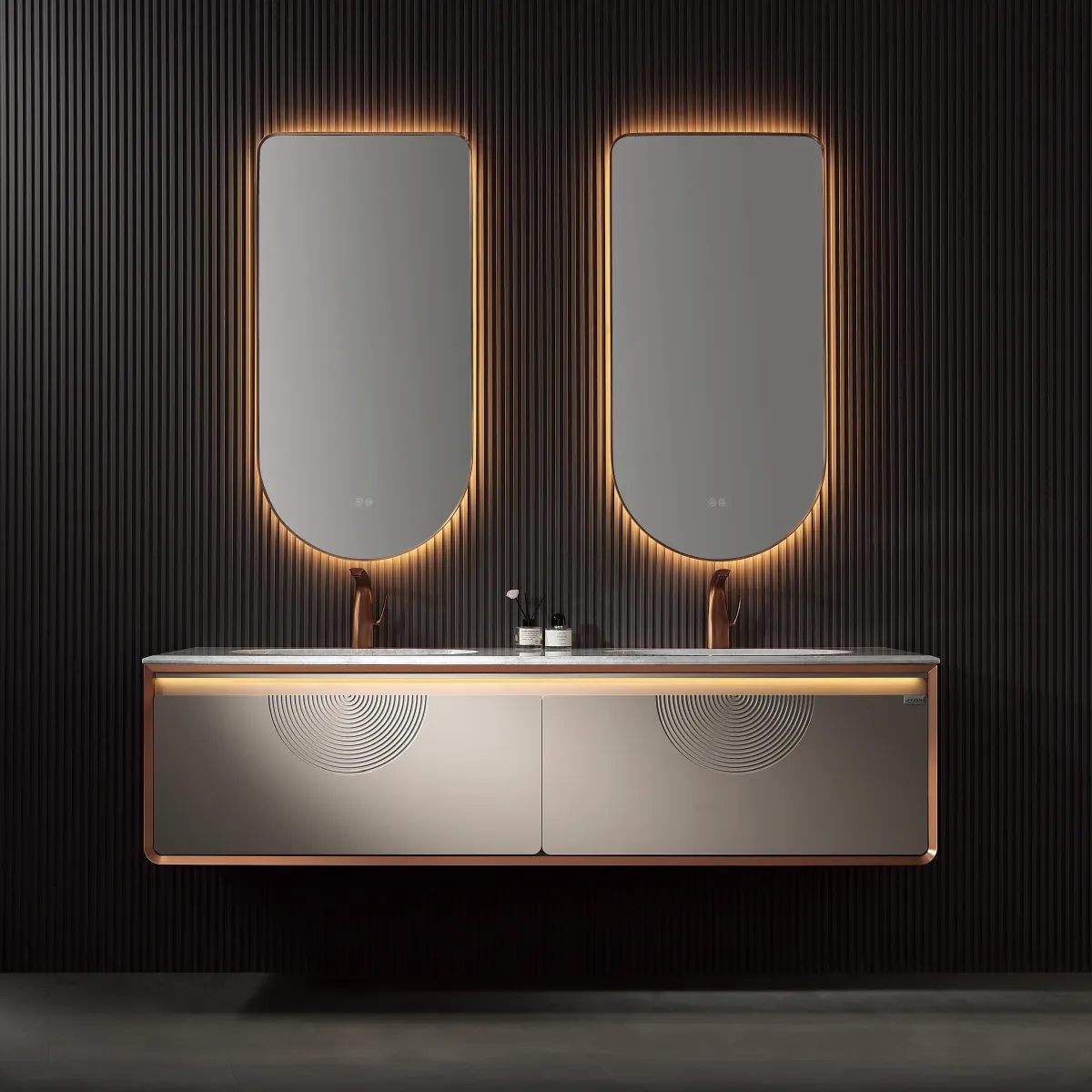
Hospitality vanity manufacturers build bathroom vanities to commercial-project specifications: humidity-rated materials, contract-grade hardware, batch consistency across hundreds of rooms, and documented quality control. This reference walks FF&E procurement managers and interior designers through the specification, certification, timeline, and audit questions that decide whether a factory can repeat quality across 400 rooms.
Hotels do not buy vanities the way homeowners do. A residential buyer purchases one unit and lives with small flaws. A 200-room property purchases hundreds of identical units, installs them in the most humid space in the building, and expects every one of them to look the same on day one and on day 3,650. That gap between residential product and contract requirement is exactly what this reference covers.
Request the 2026 hospitality catalog to see current wall-mounted, freestanding, and double-sink programs before you draft an RFQ: custom and OEM program details.
What a Hospitality Vanity Manufacturer Does Differently
A hospitality vanity manufacturer engineers for project-scale risk rather than single-unit appeal. The practical differences show up in four places: material selection rated for 24/7 humidity exposure, batch production control that keeps unit 1 and unit 400 visually identical, packaging engineered for container transit, and documentation that survives a general contractor's submittal process.
Residential vanity lines optimize for showroom impact and price point. Contract lines optimize for what happens after handover. Housekeeping carts clip corners. Guests stand water on countertops for hours. Maintenance teams need parts that match five years after installation. A manufacturer set up for hospitality work answers those conditions in the base specification, not as a paid upgrade.
The structural difference is visible in the factory itself. Project-oriented producers run dedicated lines for case goods, hold tooling for repeat orders, and archive shop drawings per project so a property can reorder matching units mid-lifecycle. Foshan Langdeng Sanitary Ware, for example, has produced stainless steel bathroom furniture since 2002 and runs a facility of more than 20,000 m² with CNC and laser-cutting lines serving buyers in 70 countries. Scale like that matters because reorder continuity depends on the factory still being there, with the same tooling, years later.
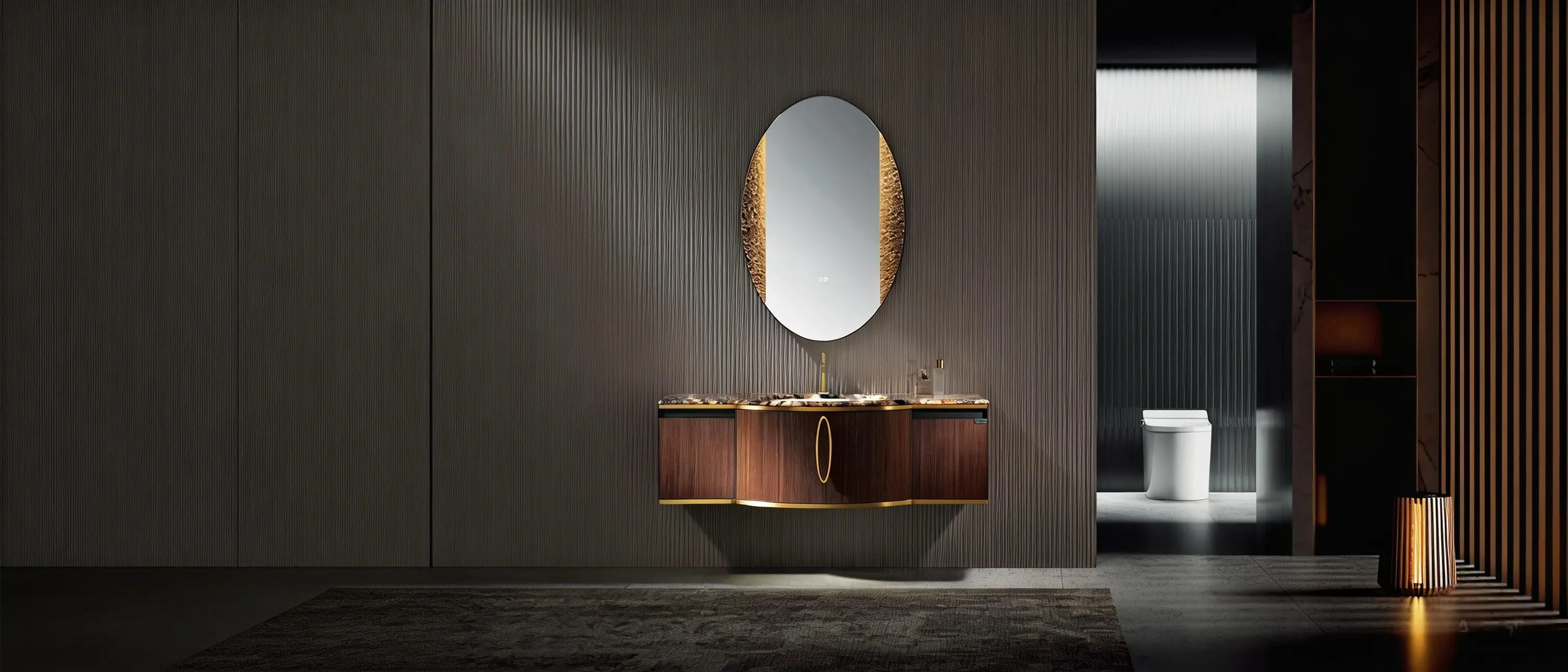
Packaging is the least glamorous differentiator and one of the most expensive to get wrong. Contract-grade packing means corner protection rated for container stacking, moisture barriers for the ocean leg, and carton labeling that matches the room-matrix so the installer on floor 14 opens the right box. Ask a candidate factory for its damage-claim rate on the last ten project shipments; a producer that tracks the number will tell you, and a producer that does not track it is quoting you its retail packing line.
For procurement teams, the screening question is simple: does the factory's standard documentation pack include shop drawings, material certificates, and finish samples per SKU? If those are "available on request," the line was built for retail, not for projects.
Material Selection Drives Lifecycle Cost
Material choice sets the replacement clock for a hotel bathroom vanity, and stainless steel sets it longest. Grade 304 stainless steel does not absorb moisture, swell, delaminate, or host mold — the four failure modes that retire wood-based vanities early in commercial bathrooms. For coastal or pool-adjacent properties, grade 316 adds molybdenum for stronger chloride resistance.
The comparison below is the one your lifecycle budget actually feels. Wood-substrate products fail in humid commercial bathrooms through mechanisms that no coating fully prevents, because the substrate itself is hygroscopic. The pattern repeats across properties: swollen MDF panels, warped solid wood doors, peeling PVC laminate, replaced not because they look dated, but because they failed.
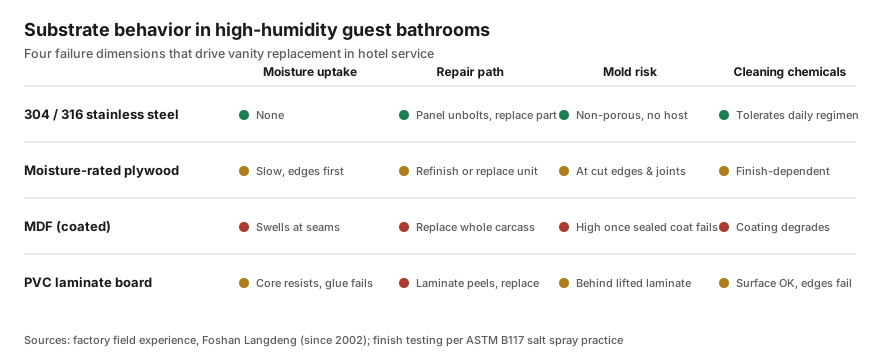
Three substrate notes for specifiers:
- 304 vs 316 stainless steel. Both are austenitic and non-magnetic. 316 justifies its premium within a few kilometers of salt water or in spa areas with chlorinated air. Inland city properties rarely need it. The full breakdown is in our 304 vs 316 grade guide.
- Plywood and PVC have a place in dry-zone furniture or budget-tier properties with shorter renovation cycles. Specify them deliberately, with moisture ratings in writing, rather than by default.
- Finish is part of the material spec. Brushed, PVD-coated, and powder-coated stainless surfaces age differently under housekeeping chemicals. Ask for the finish abrasion test method, not just a name.
Steel-body construction also changes the repair economics: a damaged door or panel unbolts and replaces, where a swollen MDF carcass means replacing the whole unit and often re-tiling around it.
Housekeeping chemistry is the quiet variable in finish lifespan. Quaternary disinfectants and chlorine-based cleaners attack lacquered wood finishes and cheap plated hardware within the first year of daily use, while brushed and PVD-finished stainless surfaces tolerate the same regimen. Put the property's actual cleaning protocol in the RFQ and ask the factory to confirm finish compatibility in writing. It costs nothing at specification time and removes the most common source of year-two warranty disputes.
The Specification Checklist Your RFQ Needs
An RFQ that locks eight fields gets comparable quotes; an RFQ that leaves them open gets quotes you cannot compare. The eight: overall dimensions with tolerance, mounting type and load rating, substrate and grade, countertop material and cutout drawings, finish with test method, hardware brand and cycle rating, packaging spec, and required documentation per shipment.
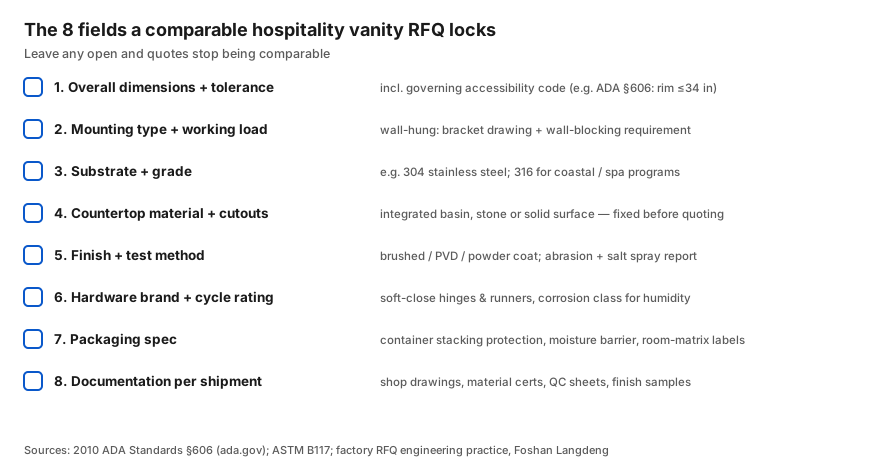
Three of those fields carry most of the risk:
Mounting and load. Wall-hung units must state a working load — a fully loaded countertop plus the guest who sits on it. Ask for the internal bracket drawing and the wall-blocking requirement, because the installer on site will need both, and missing blocking specs are a common cause of schedule slip.
Dimensions against accessibility rules. For US projects, accessible guestrooms follow the 2010 ADA Standards, §606: rim height maximum 34 inches, knee clearance 27 inches high, and insulated or protected drain pipes. European and GCC projects carry their own dimensional codes. State the governing standard in the RFQ so the factory engineers to it instead of guessing.
Countertop integration. Integrated stainless basins, stone tops, and solid-surface tops each change the cutout drawing, the packaging, and the damage rate in transit. Decide before quoting, not after.
Hardware deserves its own line item rather than a footnote. Soft-close hinges and drawer runners in a guestroom cycle thousands of times per year, far past residential duty assumptions. Specify the hardware brand or an approved-equal list, the rated cycle count, and the corrosion class for humid environments. The cost difference between commodity and contract-grade hardware is small per unit; the labor cost of swapping failed hinges across 200 rooms is not.
A factory accustomed to hospitality work will return the RFQ with a shop drawing set for approval rather than a one-line price. That response pattern itself is a useful screen: detailed counter-questions signal a real project department.
Certifications Worth Verifying Before You Sign
Certificates only reduce risk when you verify scope, issuer, and date — a logo on a website reduces nothing. For a hospitality vanity program, four document classes are worth the verification effort: quality-system certification, corrosion test reports, accessibility compliance statements, and import documentation for the destination market.
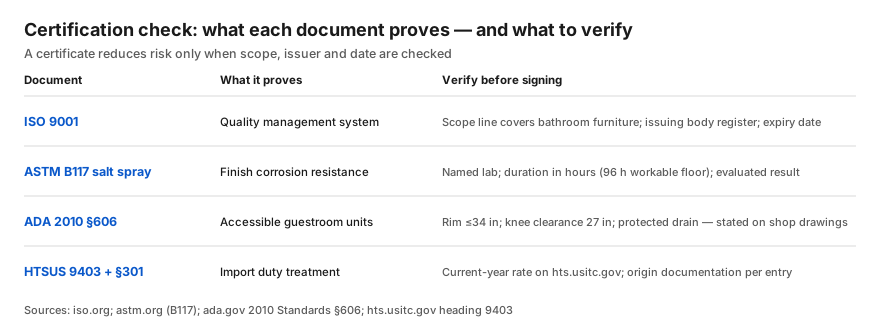
ISO 9001 certifies the quality management system, not the product. Check the certificate's scope line ("design and manufacture of stainless steel bathroom furniture" is the wording you want), the certification body, and the expiry date against the ISO 9001 standard registry of the issuing body.
Salt spray testing under ASTM B117 is the standard accelerated-corrosion benchmark for coated and stainless surfaces. A credible report names the lab, the test duration in hours — 96 hours is a workable floor for inland hospitality finishes, with longer runs for coastal programs — and the evaluated result, not just "passed." Our coastal-property salt spray guide shows what a real report looks like.
Import compliance belongs in the certification conversation because it lands on your invoice. Vanities ship under HTSUS heading 9403; duty treatment and Section 301 status for China-origin furniture change with trade policy, so verify the current rate on the official HTSUS schedule for your entry year rather than relying on last project's math. A 25% additional tariff line, where it applies, changes sourcing math more than any unit-price negotiation.
For multi-flag operators, ask whether the factory has passed brand-side audits before. Supplier files from prior Marriott, Hilton, or Accor projects shorten your own qualification cycle.
Production Timeline from Shop Drawings to Container
A realistic custom hospitality vanity timeline runs 30-45 days from approved shop drawings to container loading, and compresses only at the cost of quality checkpoints. The sequence that protects you: drawing approval, material procurement, first article inspection, batch production, in-line QC, pre-shipment inspection, then packing and loading.
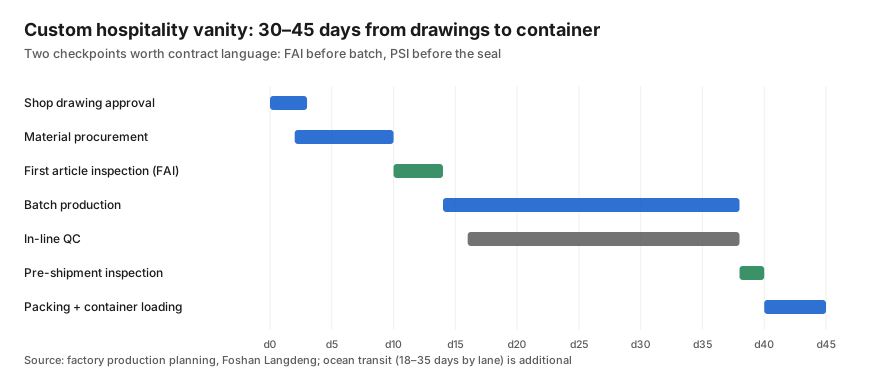
Two checkpoints deserve contract language:
First article inspection (FAI). One complete unit, built on production tooling, approved by you — or your third-party inspector — before batch production starts. The FAI catches finish mismatches, hardware substitutions, and drawing misreads when one unit is at stake instead of 400 units. Skipping FAI to save a week is the most expensive shortcut in the category.
Pre-shipment inspection (PSI). AQL-based sampling after packing, before the container seals. Standard practice is third-party PSI for first orders, factory-QC reports with photos for repeats. As of June 2026, third-party inspection in the Pearl River Delta books out about a week ahead, so schedule the slot when production starts, not when it ends.
Batch consistency is a production-planning issue, not a finishing issue. Finishes applied across separate production runs can drift in tone, which reads as a defect when two adjacent rooms differ. For programs above one container, ask how the factory batches finish application — single-run finishing for the full order, or per-batch with retained control samples — and have a signed finish sample on file from FAI onward as the arbitration reference.
On the calendar itself: add ocean transit (18-35 days to North American or European ports depending on lane), customs clearance, and inland delivery to your site-install date, then work backward to the order date. A vanity program ordered 90 days before the install window carries schedule slack; one ordered 60 days out is betting the opening date on zero variance.
Send your spec sheet for a project quote. A factory project team will return shop drawings and a dated production plan: hotel bathroom vanity programs.
How to Audit an OEM/ODM Vanity Partner
Auditing a vanity factory takes one day on site or one structured video session, and it answers the question a quote cannot: can this partner repeat quality at volume? Focus the audit on production capability, process control, and export history, in that order, and insist on seeing live production, not a showroom.
Production capability. Match the equipment list to your product. Stainless steel case goods require sheet-metal capacity: laser cutting, CNC bending, and welding and polishing stations. A factory with 20,000 m² of floor and dedicated metal-forming lines is structurally different from a trading company with a 200 m² showroom; the difference is visible within ten minutes of a walkthrough. Our factory tour and inspection guide lists what to photograph and which line positions to ask about.
Process control. Ask to see the QC records for a current order: incoming material checks against mill certificates, in-line dimensional checks, and final inspection sheets. Real records are dated, signed, and slightly messy. Pristine binders printed for your visit are their own answer.
Export history. Container loading photos, bills of lading to your region, and references from project buyers in your market verify that the factory's packaging and documentation survive your import chain. A producer shipping to 70 countries has already solved problems a domestic-only factory has not met yet.
Spare parts and warranty terms. A hospitality program should close with a spare-parts schedule (typically 2-5% overage on doors, panels, and hardware shipped with the main order) and a warranty that names response times, not just duration. Five years on structure and two years on hardware is a workable baseline for stainless steel programs; the more useful clause is the one obligating the factory to hold tooling and finish records for reorder matching through the property's renovation cycle.
OEM versus ODM scope. OEM work builds your design; ODM adapts the factory's engineered platform to your project's dimensions and finishes. ODM is usually faster and cheaper for standard guestroom programs because the engineering risk is pre-solved; OEM earns its premium on signature properties where the design is the point. The trade-offs are mapped in our OEM vs ODM manufacturing guide.
FAQ
The questions below are the ones FF&E buyers and specifiers ask most often when qualifying hospitality vanity manufacturers. Where an answer depends on project specifics — order volume, destination market, or property class — the answer states the variable instead of a falsely precise number.
What is the standard hotel bathroom vanity height?
Standard hotel vanities run 32 to 36 inches (810-915 mm) to the countertop rim. Accessible guestrooms under the 2010 ADA Standards cap rim height at 34 inches with 27 inches of knee clearance below. European projects commonly specify 850 mm. Confirm the governing accessibility code per market before fixing the dimension.
What is the typical lead time for OEM hotel bathroom vanities?
Plan on 30-45 days from approved shop drawings to container loading for custom production, plus 18-35 days of ocean transit depending on the destination port. Drawing approval cycles and third-party inspection scheduling sit outside that window, so a 90-day runway from order to site delivery is the safe planning figure.
Do vanity factories offer both OEM and ODM hospitality programs?
Most project-oriented factories run both. OEM builds the buyer's design from supplied drawings; ODM adapts the factory's existing engineered models to project dimensions and finishes. ODM carries less engineering risk and shorter lead time for standard guestrooms, while OEM suits signature properties where a custom design defines the room.
How do I verify a hotel vanity manufacturer before placing an order?
Verify four things: a live factory walkthrough or video audit showing metal-forming production, an ISO 9001 certificate whose scope covers bathroom furniture manufacture, dated QC records from a current order, and export references in your market. A first article inspection clause in the contract then protects the batch itself.
What is the minimum order quantity for hospitality bathroom vanities?
Custom hospitality programs commonly start at 50-100 units, which aligns with one production batch and efficient container use. Standard catalog models often carry lower MOQs and can be mixed across SKUs in one container. For a 200-room property, MOQ is rarely the constraint; for boutique projects under 30 rooms, ask about catalog-based ODM programs.
Which materials are best for hotel bathroom vanities?
Grade 304 stainless steel is the strongest fit for guest bathrooms: it does not swell, delaminate, or host mold under constant humidity, and damaged panels replace individually. Grade 316 adds chloride resistance for coastal and spa properties. Moisture-rated plywood and PVC suit dry zones or short renovation cycles when specified deliberately.
Sources
The references below are the official publishers of the standards, test methods, and trade data cited above, so your team can verify each figure at the source.
- 2010 ADA Standards for Accessible Design — U.S. Department of Justice, §606 lavatories and sinks
- ISO 9001 Quality Management — International Organization for Standardization
- ASTM B117 Standard Practice for Operating Salt Spray Apparatus — ASTM International
- Harmonized Tariff Schedule of the United States — U.S. International Trade Commission, heading 9403
- Foshan Langdeng Sanitary Ware — company profile — factory scale, history, and certification context cited above
Contact the sales engineering team for OEM/ODM program details, current catalog, and a dated production plan for your project: hotel bathroom vanity programs.